


Presentation of 3D models for the blind in Vienna
The "Art in Passing" project by the organization Street Art Belgrade, which creates 3D models of murals for the blind and visually impaired, was presented in Vienna at the annual Zero Project conference held in the United Nations building.
The project of the organization Street Art Belgrade was recognized as an extremely innovative and creative way of bringing art closer to blind and partially sighted people and was chosen to be presented within the official program of the conference whit more than 1000 participants from all over the world.
For more than 10 years, the Zero Project foundation from Vienna has been dedicated to finding and sharing innovative solutions that improve the daily life and rights of all people with disabilities. During a private visit to Belgrade, their representative came across one of the nine models of murals that Street Art Belgrade installed in the city in the last two years and recognized the potential to present the project to a wider international audience.
As part of the cooperation with the Zero Project Foundation, Street Art Belgrade produced three 3D models of murals from the Calle Libre festival that will be installed in the center of Vienna, in the Karl-Farkas Park. These models are also featured in the first Austrian inclusive museum guide. During the three days of the conference in the atrium of the UN building, the famous Serbian artist Jana Danilović painted a mural called "Inclusion". For this mural a 3D model was created with a description in Braille, and for the first time 3D elements (birds) were included in the painting itself. The mural and 3D models were presented at the closing ceremony of the conference, after which they will go on a tour of galleries throughout Austria.
The mural "Inclusion" depicts the universal truth that touch and love break down all barriers and remain a source of strength for everyone.
About the project "Art in Passing"
The goal of the project is to bring street art closer to blind and partially sighted people through the installation of models made with 3D technology. Models are an innovative approach to the presentation of street art and graffiti, because with 3D technology, blind and partially sighted people are enabled to get to know the works of art on the streets of Belgrade through touch. Along with the works, there are Braille descriptions that can rarely be found in the public space. The first 3D models for the blind and partially sighted were installed in 2021 on the occasion of October 15th, which is celebrated worldwide as the Day of the Blind and Visually Impaired, and to date a total of nine models have been installed in Belgrade in different locations - the city center, Vračar and New Belgrade.
"We have always been of the opinion that street art is the freest form of art and that it is accessible to everyone because it is on the streets. However, blind and partially sighted people are excluded from this artistic expression. That's why we decided to create 3D models of the murals. In this way, we wanted to bring works on the street closer to the blind and visually impaired and to draw the attention of the general public to the needs of this group of citizens, their inclusion in the daily life of the city - and street art is certainly an important part of that" - the statement of the Street Art Belgrade organization. "We are very happy and proud that we had the opportunity to present and realize the project outside of Serbia and to convey our experience to an international audience in order to increase the accessibility of art to all members of the community" - concluded the members of the association.
Conference participants from the USA, Australia, Bulgaria, Israel, and Great Britain showed interest in the project and the first initiatives to implement the project in those countries have already been launched.
Artist Jana Danilović believes that this is a great opportunity to show how important it is to be aware of how public space is used and that street art, which we perceive as exclusively visual, can also be tactile. "This project quite unexpectedly opened up a new field in art for me, how to act further in my work in order to include the tactile aspect. For most street artists, a democratic approach to art is very important, and it turns out that there is one group of people that is completely excluded, and this is one way to correct that." - says Jana Danilović
The presentation in Vienna, the creation of models and murals is supported by the Zero Project foundation, the European Union platform - Culture Moves and the Goethe-Institut, the national platform Serbia Creates responsible for the international promotion of creative industries, as well as the city organization of the blind in Belgrade.
Video interview for Gebardenwelt TV:
https://www.gebaerdenwelt.tv/zero-project-conference-interview-mit-kuenstlerin-jana-danilovic/
Video file of the interview:
https://we.tl/t-2QqAp9MH6r
You can find more photos here:
https://zeroproject.org/zerocon23/zerocon23-photo-wall#c1750
Links:
https://streetartbelgrade.com/
https://umetnostuprolazu.com/
https://zeroproject.org/
https://zeroproject.org/news/article/inclusive-street-art
Disclaimer:
This work was produced with the financial assistance of the European Union. The views expressed herein can in no way be taken to reflect the official opinion of the European Union.


Announcement: The Presentation of 3D models for the blind in Vienna
The "Art in Passing" project by the organization Street Art Belgrade, which creates 3D models of murals for the blind and visually impaired, will be presented in Vienna at the annual Zero Project conference held in the United Nations building.
The project of the organization Street Art Belgrade was recognized as an extremely innovative and creative way of bringing art closer to blind and partially sighted people and was chosen to be presented within the official program of the conference (22.2. - 24.2.) which gathers over 800 organizations from all over the world.
For more than 10 years, the Zero Project foundation from Vienna has been dedicated to finding and sharing innovative solutions that improve the daily life and rights of all people with disabilities. During a private visit to Belgrade, their representative came across one of the nine models of murals that were installed in the city in the last two years and recognized the potential to present the project to a wider international audience.
As part of the cooperation with the Zero Project Foundation, three models of murals will be installed in the very center of Vienna, in the Karl-Farkas Park, which will also be featuredin the first Austrian inclusive museum guide. Also, as a unique performance during the three days of the conference in the atrium of the UN building, the famous Serbian artist Jana Danilović will paint a mural called "Inclusion". A 3D model was created for this mural, which also contains a description in Braille. The mural and 3D model will be presented at the closing ceremony of the conference, after which they will go on a tour of galleries throughout Austria.

The mural "Inclusion" depicts the universal truth that touch and love break down all barriers and remain a source of strength for everyone.
On the last day of the conference on Friday, February 24th at 12:00, a panel discussion will be held with members of the organization Street Art Belgrade as well as with international participants in the field of street art. The panel will be streamed live via the YouTube channel:
https://www.b2match.com/e/zero-project-conference-2023/sessions/c2Vzc2lvbjoxMzY2NDY=
About the project "Art in Passing"
The goal of the project is to bring street art closer to blind and partially sighted people through the installation of models made with 3D technology. Mural models are an innovative approach to the presentation of street art and graffiti, because with 3D technology, blind and partially sighted people are enabled to get to know the works of art on the streets of Belgrade through touch. Along with the works, there are Braille descriptions that can rarely be found in the public space. The first 3D models of murals for the blind and partially sighted were installed in 2021 on the occasion of October 15th, which is celebrated worldwide as the Day of the Blind and Visually Impaired, and to date a total of nine models have been installed in Belgrade in different locations - the city center, Vračar and New Belgrade.
"We have always been of the opinion that street art is the freest form of art and that it is accessible to everyone because it is on the streets. However, blind and partially sighted people are excluded from this artistic expression. That's why we decided to create 3D models of the murals. In this way, we wanted to bring works on the street closer to the blind and visually impaired and to draw the attention of the general public to the needs of this group of citizens, their inclusion in the daily life of the city - and street art is certainly an important part of that" - the statement of the Street Art Belgrade organization. "We are very happy and proud to have the opportunity to present and realize the project outside of Serbia and to convey our experience to an international audience in order to increase the accessibility of art to all members of the community - concluded the members of the association.
Artist Jana Danilović believes that this is a great opportunity to show how important it is to be aware of how public space is used and that street art, which we perceive as exclusively visual, can also be tactile. "This project quite unexpectedly opened up a new field in art for me, how to act further in my work in order to include the tactile aspect. For most street artists, a democratic approach to art is very important, and it turns out that there is one group of people that is completely excluded, and this is one way to correct that." - says Jana Danilović
The presentation in Vienna, the creation of models and murals is supported by the Zero Project foundation, the European Union platform - Culture Moves and the Goethe-Institut, the national platform Serbia Creates responsible for the international promotion of creative industries, as well as the city organization of the blind in Belgrade. The Tourist Organization of Serbia provided support in the promotion of the project in Serbia and Austria.
The announcement on the Zero Project website can be found here:
https://zeroproject.org/news/article/inclusive-street-art
Links:
https://streetartbelgrade.com/
https://umetnostuprolazu.com/
https://zeroproject.org/
Disclaimer:
This work was produced with the financial assistance of the European Union. The views expressed herein can in no way be taken to reflect the official opinion of the European Union.

Urban Heritage Hub – a platform for the promotion of digitization of urban and street art
This space will improve the way street art and graffiti and urban art, which are part of contemporary creativity, are collected, documented, preserved and promoted.
The goal of the project is to preserve street art as a cultural heritage through the archive, but also through the promotion of digitization as the best way to preserve street art for further research and analysis, as well as through communication with a wider audience and future experts. "Hub" in the very name of the platform refers to the networking and unification of all street and urban art digitization projects in one place, as well as networking and continuous education in the digitization process of artists, curators, researchers and participants in this field.
During the year, we presented the project at events in the country and abroad to artists, cultural researchers and museum employees.
In May, colleague Ljiljana Radošević presented a project called Urban Heritage Hub Case Study to an expert audience at the Go Indigo conference; New Life of Street Art in Virtual Reality. In July, we presented the project as part of the annual Metalogues conference from Greece, which gathers an audience that follows innovative technologies and Virtual Reality. In December, the project was presented in Ljubljana to the employees of the cultural center Rog, and in Belgrade, as part of the street art weekend in Božidarac, the project was presented to artists and representatives of associations dealing with street art in Serbia and Croatia.
The project was supported through the digitization competition of the Ministry of Culture and Information.
Visit the Urban Heritage Hub
https://streetartbelgrade.com/urban-heritage-hub/

Graffiti na Gradele and DUK
In the Božidarac cultural center, during the weekend dedicated to street art, a panel was held where Marko Boko and Antonija Bačić in front of the Graffiti na Gradele festival from Croatia and Vuk Đurić - ENDO in front of the DUK festival from Čačak discussed the challenges of organizing events dedicated to street art.
Marko and Antonija presented one of the largest regional festivals and programs for young people that they have been organizing for ten years. Graffiti on Gradele is a festival that has been organized in Bol on Brač since 2012. Also throughout the year, the festival supports the independent cultural scene through various events and painting, and the festival itself in Bol gathers a large number of artists who paint large-format walls. The festival has a strong focus on the development and promotion of volunteerism, with an additional educational note - where the entire local community is engaged. It was awarded the annual prize of the local authorities and was declared the best festival in Croatia. The festival is active as an organizer of exhibitions and live concerts, with a focus on young and unestablished artists in order to open space for their further work.

Vuk Đurić presented Days of Urban Culture, a festival he has been organizing together with his colleagues in Čačak for the past eight years. As part of the Day of Urban Culture (DUK), concerts, extreme sports and wall painting take place in parallel. Today in Čačak there are over a hundred large-format painted walls by local, regional and international artists. This year Čačak is the national capital of culture and DUK prepared a special edition that Vuk presented during the conversation.
The artists Jana Danilović and Aleksandra Petković participated in the conversation, each through their experience of organizing the festival, as well as the artist Predrag Popović Piros. The conversation was led by art historian Ljiljana Radošević, and some of the topics were self-sustainability and financing of the festival, participation of local and city institutions, reactions of the local community, as well as the participation of artists from the region and the world at festivals.
https://youtu.be/eoLhxla6ZSw

Visit to Ljubljana and Rog Center
During our stay in Ljubljana, we presented our association's projects: digitalization of street art and VR exhibitions, creation of Urban Heritage Hub, 3D models of murals for the blind and partially sighted, and connection with street artists.
Once the center is open, there is a possibility for cooperation through their residences, special programs dedicated to street art, as well as through Grafem - a program for the promotion of female graffiti and street art culture, co-produced by Urbana Vrana and Center Rog. "Gra" as in graffiti + "fem" as in feminine = GraFEM in Ljubljana. GraFEM fosters the empowerment and education of graffiti and street artists, as well as the promotion and reflection on female graffiti and the role of women on the Slovenian and international scene of graffiti and street art. As part of the program, local and foreign artists paint the area next to the Ljubljanica river with their masterpieces of graffiti and street art, with parallel workshops and graffiti tours around the city. The goal of the project is to encourage thinking about the role of women on the Slovenian and international scene of graffiti and street art.
You can hear more about the festival at the forum held last year in Belgrade.
https://youtu.be/Rk8QSJHvbdY
The Rog Center will be open to the public at the end of 2023. and is located on the site of the Rog factory, which produced the iconic Rog bicycles. The original purpose of the building will remain preserved, adapted to modern times - this will be a public space for the production of cultural and creative industries, with an emphasis on craftsmanship, applied art and design.
Centar Rog will be a universally accessible creative hub with programs designed to bridge the gap between high and popular culture. It will offer almost 9,000 m2 of creative space with accompanying programs, as well as a new park of 8,000 m2 that will be available to citizens for daily use and public events.

Educational mirror: Stories from the walls and AproPop
When we say graffiti, we think of a secretly written drawing or message on a public surface, usually on a wall.
There is no city without graffiti, and depending on the cultural and historical context in which they were created, graffiti tell different stories. Why they are important to us and what truths about the society we live in can be read from them - the topic of the first of two episodes of the show about graffiti, graffiti culture and street art: Stories from the Walls.
Art historian Ljiljana Radošević tells us about some of the oldest graffiti in Belgrade, but also about the contemporary styles of expression of street artists. Rock critic Petar Janjatović reveals the connection between graffiti, punk and new wave, and filmologist Ivan Velisavljević guides us through graffiti on film. Miodrag Stošić, the host of radio Belgrade 202, reminds that graffiti does not have to be written only on walls, while professor from the Faculty of Dramatic Arts, Milena Dragićević Šešić, explains how graffiti became mobile by moving to banners during protests in the 1990s.
https://youtu.be/8RxhlNGYwUY
Regardless of whether they convey political views, messages of love, artistic visions or cryptic nicknames, street art and graffiti represent a quiet street rebellion, because, like any form of intervention in public space, they are prohibited by law.
In the second episode of the show Stories from the Walls, we discover where the oldest preserved mural in Belgrade is located, when it was created and how state policy, in the eighties of the last century, encouraged the development of muralism in the capital. What is meant by the term new muralism, and what is meant by "graveyard trash romanticism"? What are the most significant film productions when it comes to graffiti culture in our country? And finally, how did graffiti and street art go from being a subversive act to recognized art? The answers are provided by art historian Ljiljana Radošević, filmologist Ivan Velisavljević, as well as street art artists Dušan Raić Dulajt, Andrej Žikić Artez and Petar Popović Piros.
https://youtu.be/05BdJUoWxxk
Author of the show: Ivana Nićiforović
On RTS, popular culture phenomena are also presented as part of the AproPop show, and one out of ten episodes is dedicated to graffiti and street art.
https://youtu.be/b37-q4gK6TY
Author of the series: Selina Lovren Aksentić
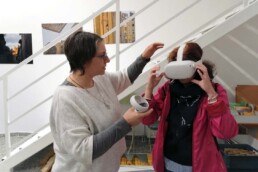
French edition of the VR exhibition in Novi Sad
This exhibition will present over 40 works created by local, French and other foreign authors on the streets of Belgrade.
The exhibition is available thanks to the unique virtual space of the VR-All-Art platform, so it will provide visitors with a special artistic experience of getting to know Belgrade street art. The works are divided into categories - old school graffiti, multi-artist collaborations, characters, templates, stickers, murals...

The ninth model mural for blind and partially sighted people was installed in Belgrade
The ninth model of the mural was made for the work of the artist Jens, one of the first graffiti artists who was key to the creation of the graffiti movement in Belgrade.
The first graffiti in Belgrade was inspired by the New York style, which, like in the rest of Europe, appeared in the mid-eighties, and Block 45 is an extremely important place for the development of graffiti and street art in Belgrade. Here, graffiti was created in the eighties, under the influence of hip-hop, break dancing and the need to step out of the gray. It is from this block that some of the most important artists of Belgrade's graffiti and street art scene originated: Jens, Hope, Cash... Today, this location houses a large number of preserved works - some of them are a couple of decades old, and the space itself represents a kind of open air gallery.
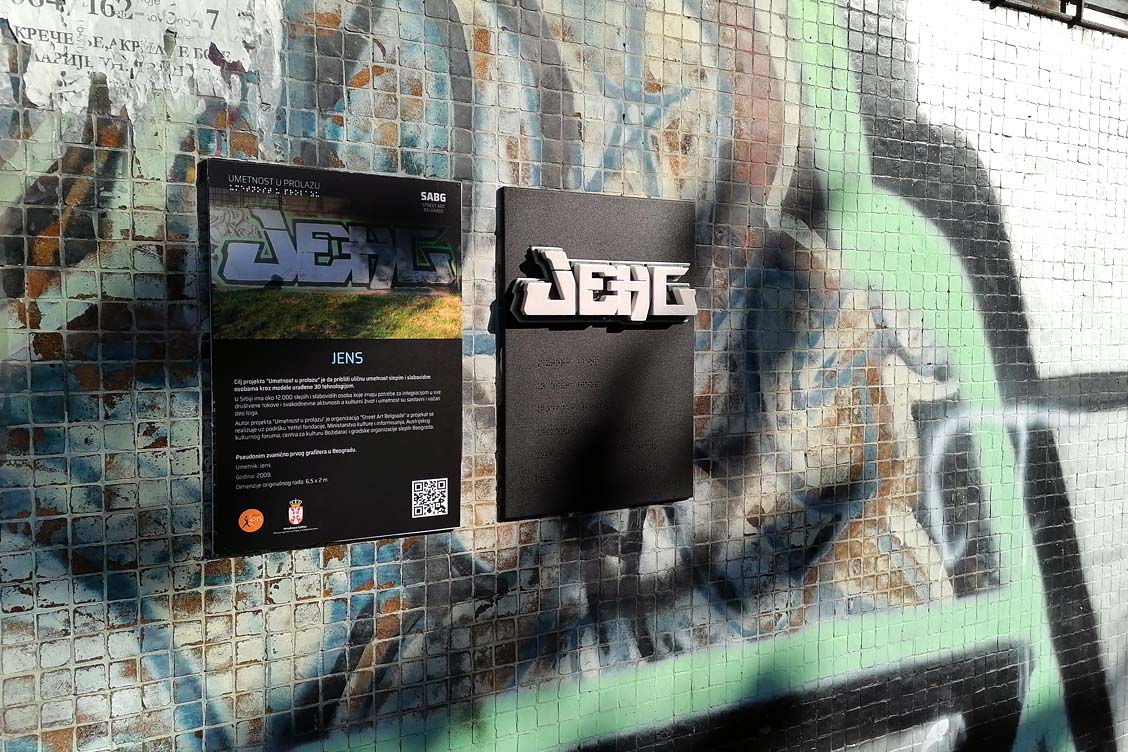
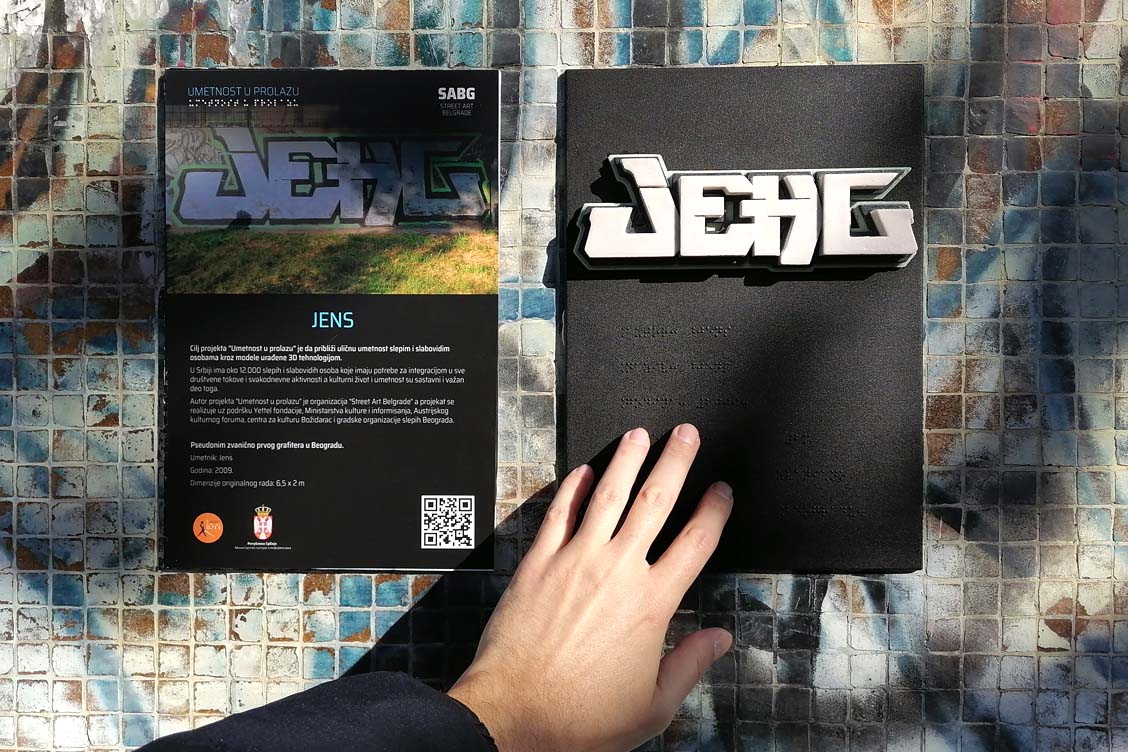
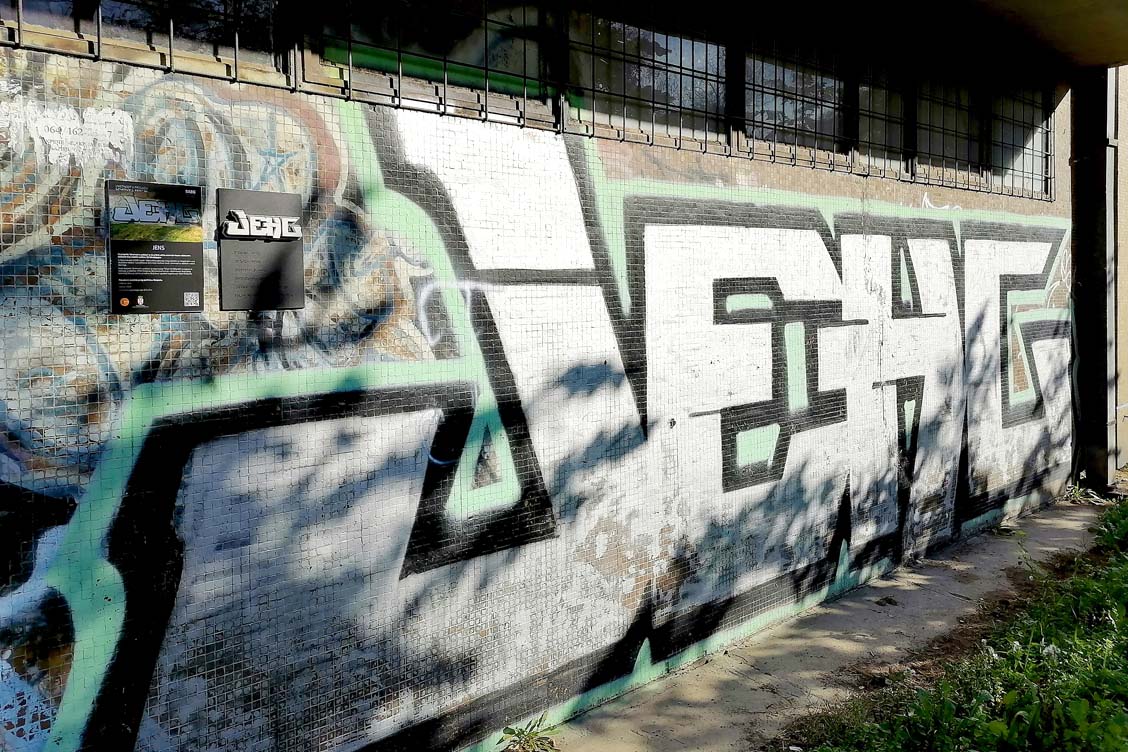
In the last year, the models have been placed in several locations around the city - two models in Vračar, three models in the area of Cetinjska, two models on the corner of Višnjićeva and Gospodar Jovanova, one model in the area of Dorćol Platz and one model in Blok 45.
The use of 3D technology is an innovative approach in the presentation of street art and graffiti, as it enables blind and partially sighted people to get to know the works of art on the streets of Belgrade through touch. All works are accompanied by descriptions in Braille, which is rarely present in the public space.
The project is implemented with the support of the Ministry of Culture and Information and in cooperation with the City Organization of the Blind in Belgrade, which gathers around 2,000 blind and partially sighted people from the territory of all Belgrade municipalities. There are about 12,000 blind and partially sighted people in Serbia who need support in realizing their rights as well as integration into all social flows and daily activities, and cultural life and art are an integral and important part of that.
In February 2023, the "Art in Passing" project will be presented at the United Nations in Vienna at the annual "Zero Project" conference, to an audience of 800 international organizations that are active in removing barriers in everyday life.

Panel: The relationship between institutions and street art
In the French Institute in Novi Sad, on Thursday 22.09. starting at 5 p.m., a panel discussion on the topic "the relationship between institutions and street art" will be held.
This panel will bring together practices and examples of cooperation between institutions and artists in the field of street art through the presentation of projects by the Embassy of the Netherlands, the French Institute in Serbia and the Austrian Cultural Forum. French artist Chaldea, Christine Koblitz from the Vienna Museum and Nevena Nikolić from the Dutch Embassy will participate in the panel, the moderator of the panel is art historian Ljiljana Radošević from the organization Street Art Belgrae.
The panel will discuss cooperation between cultural institutions and artists in the field of street art. Bearing in mind that street art that functions as a subcultural practice attracts the attention and interest of cultural and city institutions, the panelists will discuss the levels of communication and support in the field of street art. We will also discuss ways to preserve culture and subculture, and how to present street art to a wider audience from a position of cooperation with cultural and city institutions.
As part of the event, photos of works by French artists who visited Serbia will be exhibited, as well as works by Serbian artists created in France. Visitors will be able to visit the first virtual exhibition "Loving Street Art Belgrade", which is now also available in French using a VR set.
FRANCE
Chaldea is a French artist born in Paris. She visited Serbia several times as part of the All Girls Jam organized by the artist TKV, with the support of the French Institute in Belgrade and Novi Sad. Chaldea is recognizable for her unique style that is mysterious and contemporary and always evolving through the different media she uses. Her work goes beyond artistic creation and becomes a whole creative universe that she gladly shares with her audience. The artist will share her experience working on projects in Serbia.
AUSTRIA
Mag. Christine Koblitz, in charge of social media and special projects of the museum in Vienna, will present the unique project "Take over". In 2019, the Vienna Museum invited street artists to display their styles directly on the museum's architecture. Before the planned reconstruction of the museum, 40 recognized street artists were invited to "take over" the museum, creating temporary works directly on the walls of the museum itself.
NETHERLANDS
Nevena Nikolić from the Department of Culture and Media Relations of the Embassy of the Netherlands will present the "Exceptional Women of Serbia" project launched by the Embassy of the Netherlands in cooperation with the Center for Women's Studies, the GRAD Cultural Center and nine cities in Serbia. Their selection included the most significant women of the 20th and 21st centuries from various fields - among them are revolutionaries, activists, designers, philanthropists, politicians, poets, writers, lawyers, pedagogues, composers, athletes, feminists. Through a public competition, artists across Serbia were given the opportunity to portray 10 exceptional women by painting murals in selected cities.
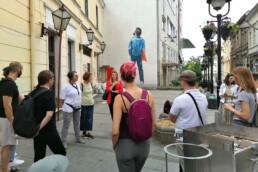
Landscape of city streets - a walk within Good Urban Life
The special program of the Belgrade International Week of Architecture "Good Urban Life / Dobar Urbani Život" is dedicated to urban interventions concerning pressing issues of city life.
The focus of our walk was not on the history of street art and graffiti in Belgrade, but we dealt with street art in the context of how the city develops, how political systems change, how the support or lack of support in some segments of culture and society is reflected in the manifestation of street art. art. We started from the cultural policy of the city, so we dealt with the protection of street art, as well as the way in which certain urban spaces are falling apart, and how they, with their condition, attract the attention of street artists to intervene in them.
The participants were addressed by Jasna Bratićević from the Center for Youth Integration, who pointed out: "At Kafe Bar 16, young people who work or have worked on the street got the opportunity to acquire some additional skills. There are a large number of cafes, bars, restaurants in Belgrade, so that there is a possibility for a large number of them to get a job. They start learning the trade here. Some stay here to work, and some go to other employers. With this, we got another safe place for them, like the hostels were until now".
During a break in the walk, the participants had the opportunity to experience the innovative street food bites of chef Vanja Puškar, the founder of the New Balkan Cuisine concept - "Our climate has enormous potential when it comes to street food. We have a rich assortment of raw materials, and I think there is a huge field for improving the offer of street food, which is already progressing year by year. Casual dining is developing globally, including in our country. It is very important that we follow the pace of development of this way of consuming food. Trends change and people want to eat something fast, but on the other hand, also with quality, with certain foods that have their own proper origin," explained Vanja.
Graffiti and street art as very recognizable artistic expressions happen in unity with the city. That is why this tour was not only about the aforementioned artistic expressions, but also about the coexistence of streets and people.
The implementation of the program was supported by the Austrian Cultural Forum.
Photographer: Vladimir Živojinović
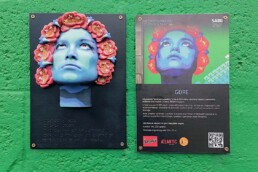
Eight models of murals for the blind and visually impaired in Belgrade
The goal of this project, led by the organization Street Art Belgrade, is to bring street art closer to blind and visually impaired people through models made using 3D printing technology that enable blind and visually impaired people to get to know the works through touch.
The first two models were put up on the walls in October 2021 and they represented the works of artist Weedzor, the third model was done in April 2022 for the mural done by artists Jana Danilović and Hope.
Five new models of murals were set up in May at several locations in the city center and they represent different artists and street art styles. The selection of the works considered the availability and proximity of the works to the City Organization of the Blind in Belgrade so that members could feel what it looks like to discover art on the street through a short walk. New murals selected for the 3D models are done by the well known and loved artists TKV, Piros, Junk, Rage, Lunar and Flying Fortress. Along with the 3D models there is a description of the works in Braille.
"I am glad that the artists were given the opportunity to participate in the project of bringing murals closer to blind and visually impaired people. We have been given a new position through which we have an additional motive to think about how to convey something that is visual to someone who cannot see. This is very important, especially since street art is considered to be the freest kind of art. This is a step forward towards an inclusive society and I am glad that people within the street art community have launched this initiative; it creates a space to think about how to bring art closer to everyone." - said the artist Aleksandra Petković TKV
There are about 12,000 blind and visually impaired people in Serbia who need support in exercising their rights as well as the integration into all social flows and daily activities. Cultural life and art are an integral and important part of that.
"At the beginning of this project, I did not believe that it was possible to adapt murals to the blind and visually impaired, and in less than a year we have a total of eight works available to us. Our community is small and art is still insufficiently accessible to blind and visually impaired people, the very fact that artists will now think of adapting their works to everyone means a lot to us. The models on the streets motivate our members to feel as a part of the city, to move and walk more, which is very valuable." - said Nikola Djordjevic, president of the City Organization of the Blind in Belgrade.
The author of the project is the organization "Street Art Belgrade" whose members have been researching, documenting and popularizing street art and graffiti for over two decades. They are dedicated in bringing street art closer to everyone and in the last two years they have organized the first street art workshops for seniors and the first street art Belgrade exhibition in Virtual Reality.
The project is supported by the City Organization of the Blind in Belgrade and the companies Yettel and Atlantic Group.
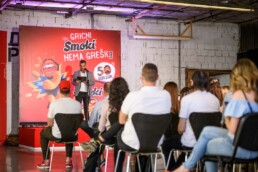
Art in passing - five new models of murals for the blind and partially sighted
Five new mural models will be installed during May at several locations in the city center and represent different artists and styles of street art.
When choosing the works, the availability and proximity of the works to the City Organization of the Blind in Belgrade was taken into account, so that the members could, through a short walk, feel what it looks like to discover art on the street. The works for which the model was made are the works of leading and recognized street artists from Serbia and the world: TKV, Piros, Junk, Rage, Lunar and Flying Fortress.
The models were made with the support of the Atlantic Stark company, and as part of the celebration of 50 years of the favorite flips - Smoky. The Atlantic Stark company wants to enable everyone to enjoy street art, which is the hallmark of this year's celebratory Smoky campaign.
Mural models are an innovative approach to presenting street art and graffiti, because by creating works of street art in 3D technology, blind and partially sighted people are able to get to know the works of art on the streets of Belgrade through touch. The works are accompanied by descriptions in Braille.
"At the beginning of this project, I didn't believe that it was possible to adapt the murals to the blind and visually impaired, but in less than a year we have a total of eight works available to us. Our community is small and art is still insufficiently accessible to blind and partially sighted people, the very fact that artists will now consider adapting their work to everyone means a lot to us. The models on the streets motivate our members to feel part of the city, to move and walk more, which is very valuable," said Nikola Đorđević, president of the Belgrade City Organization of the Blind.
At the event in Dorćol Platz, where five new models were presented, the artist TKV held a workshop with the members of the City Organization of the Blind in Belgrade on the use of spray and brought the process of creating street art even closer.
"I am glad that the artists were given the opportunity to participate in the project of bringing the mural closer to the blind and visually impaired. We got a new position through which we have an additional motive to think in the work process about how to convey something that is visual to someone who cannot see. This is very important, especially since street art is considered to be the freest type of art. This is a step forward towards an inclusive society, and I'm glad that people within the street art community started an initiative that makes this possible and creates a space to think about how to bring art closer to everyone." - said artist Aleksandra Petković TKV
The project was supported by the Atlantic Grupa company, as part of the campaign to mark Smoky's 50th birthday. The company's desire is to awaken the creative spirit and support art, as well as to bring art closer to all members of the community.
"As a brand that connects the entire region and all generations, which is a universal language in a large area and which, as art, knows no borders, the logical step was to create a collaboration between Smokey and famous graffiti artists from the region and to create a campaign that we extremely proud. The way Smokey celebrated its great anniversary, 50 years of existence, and the crown of the entire campaign for which we gathered today - the presentation of tactile 3D boards of our most famous street art visuals, which makes this art accessible to blind and partially sighted fellow citizens, is just one from the way in which the Atlantic Stark company takes care of social responsibility. I would like to take the opportunity to express my gratitude to the City Organization of the Blind in Belgrade and the Street Art Belgrade Association for their help and support in presenting this campaign in the right way, but also in providing the opportunity for everyone to enjoy street art. We will try to continue in the future with projects that are of great importance for the community in which we operate," said Vladimir Latinović, marketing manager of Atlantic Stark.
With these new models, Belgrade becomes the city with the most 3D models of street art for the blind and partially sighted in the region and Europe, a total of eight models are located in different locations - two models in Vračar, three models in the area of Cetinjska, two models on the corner of Višnjićeva and Gospodar Jovanova and one model in the area of Dorćol Platz.
The author of the project is the "Street Art Belgrade" organization, and support was provided by the Belgrade City Organization of the Blind and the Atlantic Grupa company.
The City Organization of the Blind in Belgrade gathers around 2,000 blind and visually impaired people from the territory of all Belgrade municipalities, while in Serbia there are around 12,000 blind and partially sighted people who need support in exercising their rights as well as integration into all social flows and daily activities, and cultural life and art are an integral and important part of it.
Photo © Alex Dmitrović

Descriptions of murals for which 3D models were made
Five new mural models will be installed during May at several locations in the city center and represent different artists and styles of street art.
Five new mural models will be installed during May at several locations in the city center and represent different artists and styles of street art. When choosing the works, the availability and proximity of the works to the Belgrade City Organization for the Blind was taken into account, so that the members could, through a short walk, feel what it looks like to discover art on the street. The works for which the model was made are the works of leading and recognized street artists from Serbia and the world: TKV, Piros, Junk, Rage, Lunar and Flying Fortress.
TKV, "Up", 2021
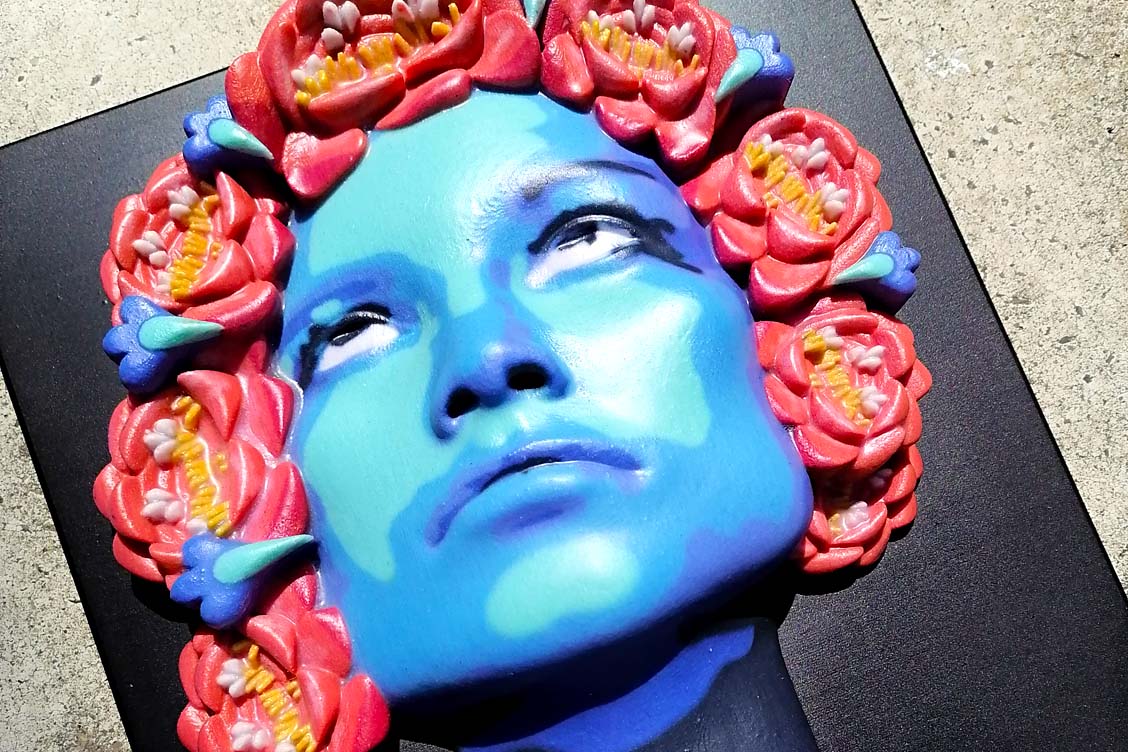
This work was created as part of the All Girls Jam project, which was held for the second time in 2021 at Dorćol Platz. The general theme was related to the color green, which symbolically represents many things, but among others, recycling, environmental protection and returning to nature. Unlike some other works by TKV, where the presented women carry with them some important stories and symbolism, this person is actually just a model who carries with her the idea of freedom, peace and strength. Looking at the sky actually represents a conscious decision to concentrate on the sky as a symbol of freedom and opportunity instead of the negative that surrounds us.
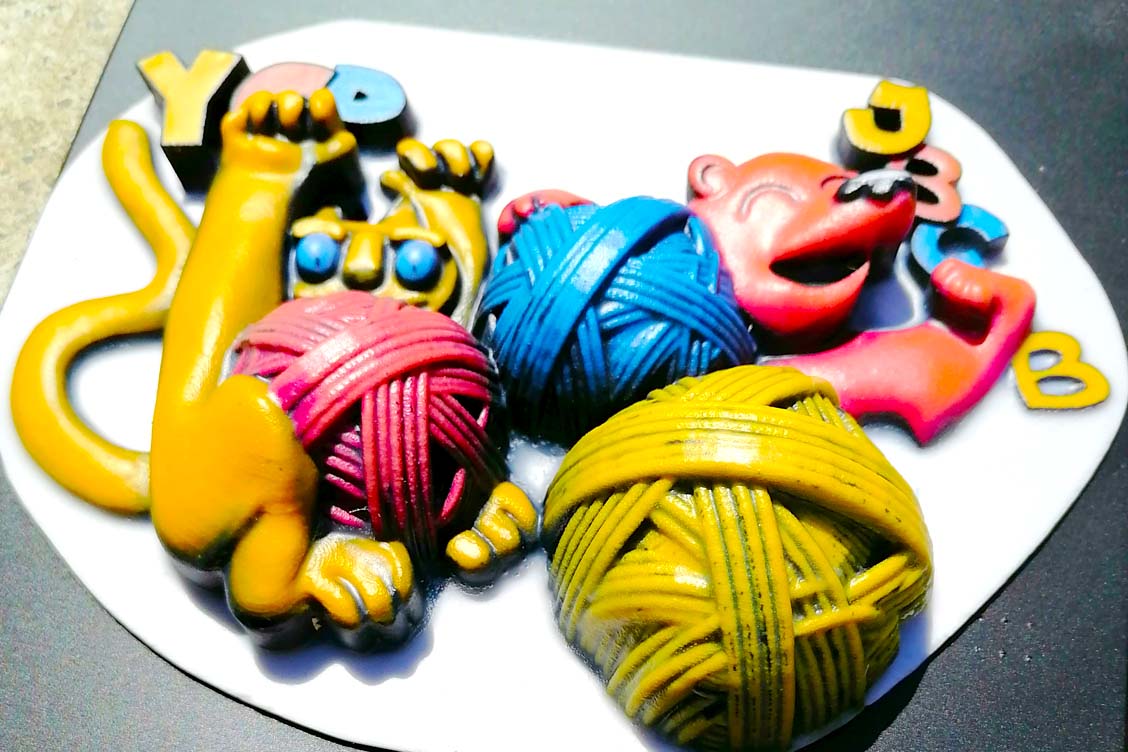
Lunar and Flying Fortress, "Cat and Bear", 2018
After more than thirty years spent on the streets creating art without permission (but also with permission), these two artists are happy to meet all over Europe to create joint works. As part of the United Colors of Belgrade / Warm up project, which was carried out in 2018 at the initiative of Paint Kartel and with the support of Street Up, Lunar and Flying Fortress actually presented their alter egos. Both Lunar's cat and Fortress's bear were created through a development process in which both were searching for their tag as well as for a visual alias that would represent them on the streets. During the development of a joint sketch and work on the street, it is quite normal that compromises occur in the process itself, especially when it comes to very specific individuals. In this work, the intention was to show in a self-ironic way the process of their long-term cooperation, reminiscent of the Czech animated series "A je to".
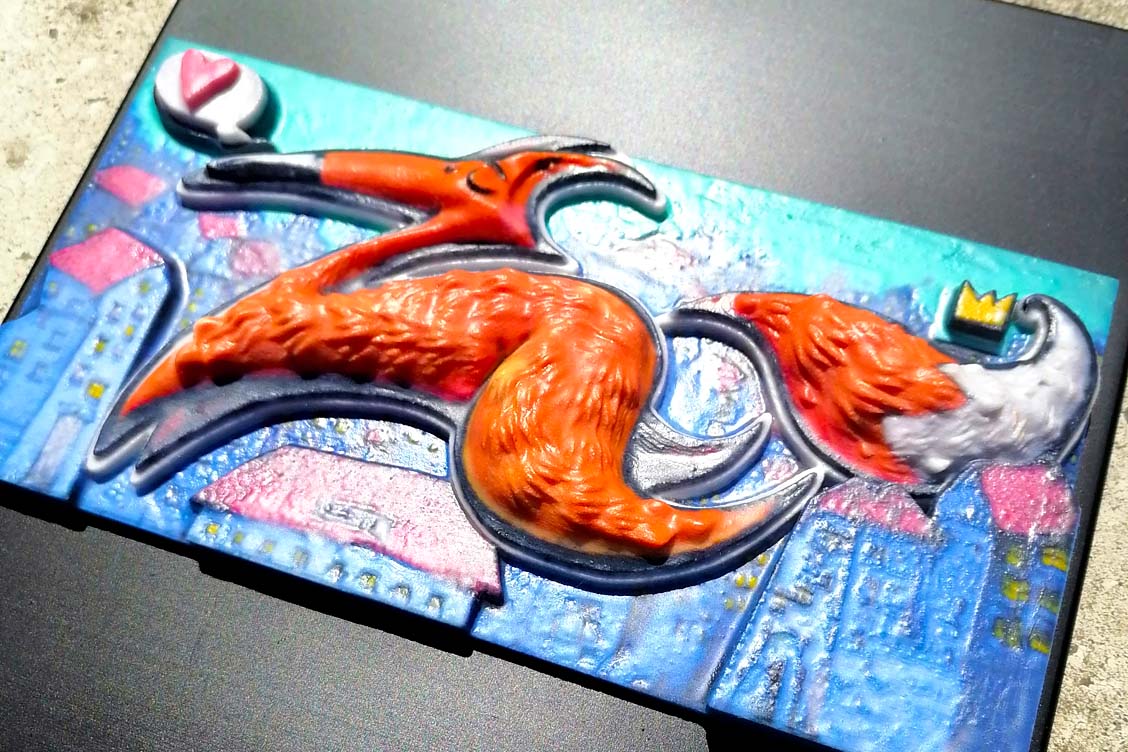
Rage, "The Fox in the City", 2018
For the last ten years, all over the city we have come across representations of foxes, wolves, various fictional forest monsters and sea wolves left behind by the artist Rage. Rage seems to create its own counterpart to the medieval Bestiary in which the real and mythological animals that occupied the imagination of the people of the Middle Ages were represented and described. He creates a whole range of animals from our urban Bestiary that symbolically inhabit our urban jungle. The work was created in 2018 as part of the United Colors of Belgrade / Warm up project.
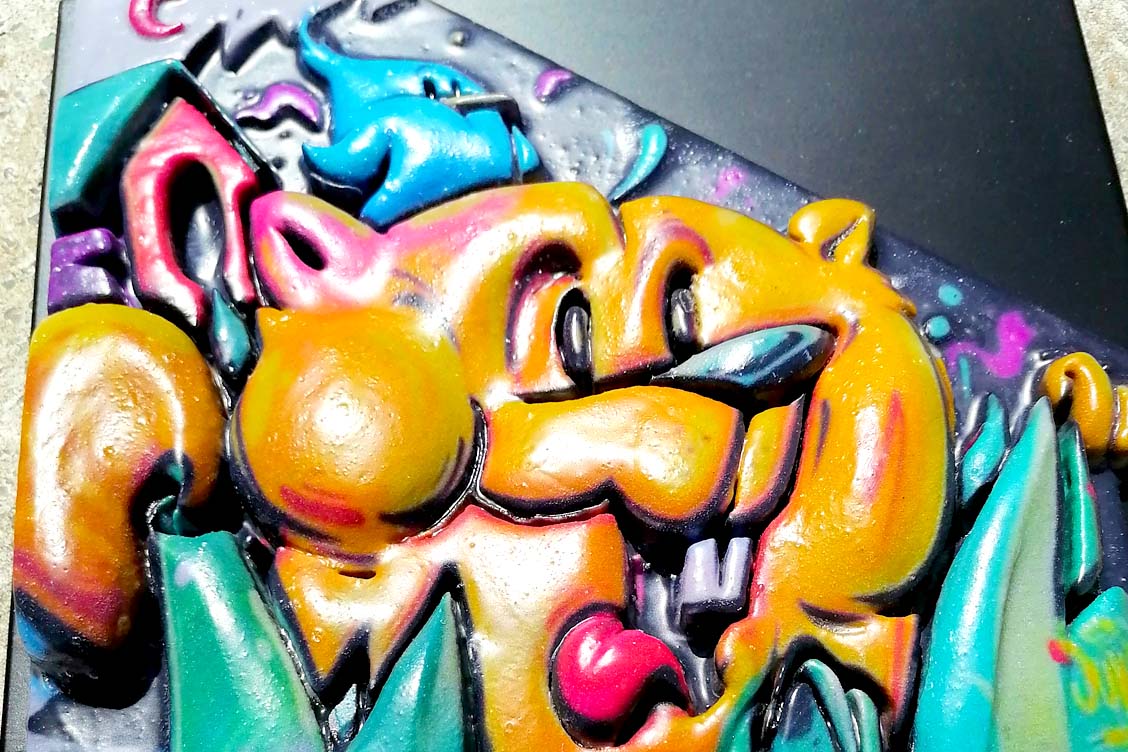
Junk, "Friends", 2018
As part of the Kafe 16 support project, several works were created by different artists who supported this unique place in the city with their engagement. Namely, the members of the Children's Shelter team started this cafe in order for street children to acquire the necessary knowledge and experience that will enable them to get a legal job after they turn 16. Junk's idea was to create a work that will delight passers-by with its positive energy and light theme, but also convey optimism to those children for whom this place is intended. The beaver and the bird are there to, in addition to being a receptive illustration that in itself carries positive connotations, show the strength of friendship between the most diverse individuals. In addition, the birdhouse, which is in the background, can be interpreted as a symbolic representation of Cafe 16, which in a way represents a safe place, a house, for all street birds that need a home.
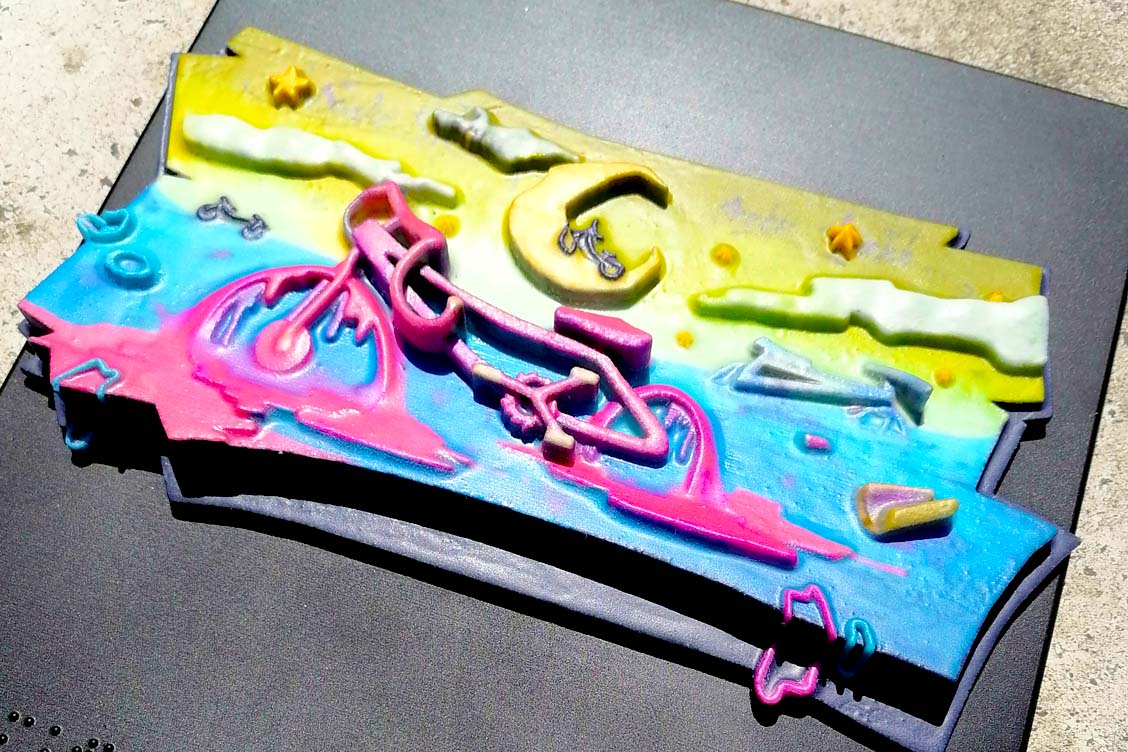
Piros, "Everyone is looking for their happiness", 2016
During 2016, a large number of the artist's friends moved out of the country. Although those farewells were full of positive and negative emotions, Piros realized that the most important thing in all of this was to support them in their new life endeavors. So he assigned each of them a bicycle, which, as a symbol from childhood, represents a magical device that can help them conquer the world. This work, which was created in the yard of the old Bajlonije brewery, is the first of this series and is one of the artist's most influential works on the street. "Everyone seeks their own happiness" was created as a sublimation of everything that the artist needed to express at that moment, from style, technique, symbolism to emotions.
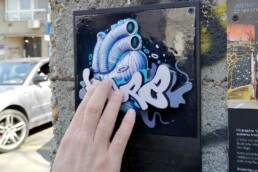
The Installation of 3D models of murals for the blind and partially sighted continues
The goal of the "Art in Passing" project, which is supported by the Yettel Foundation, is to bring street art closer to blind and partially sighted people through the installation of models made with 3D technology.
The first models that were placed in Vračar in October last year attracted a lot of attention from the domestic and foreign audience and showed how important the integration of blind and partially sighted people is in all areas of life.
Mural models are an innovative approach to presenting street art and graffiti, because by creating works of street art in 3D technology, blind and partially sighted people are able to get to know the works of art on the streets of Belgrade through touch.
"We have always been of the opinion that street art is the freest form of art and that it is accessible to everyone, and in order to make it really accessible to everyone, we decided to create a 3D model of the mural. In this way, we wanted to bring the works on the street closer to the blind and visually impaired and to divert attention of the general public to the needs of this group of citizens and their inclusion in the daily life of the city, and street art is certainly an important part of that," said Ljiljana Radošević, art historian from the Street Art Belgrade organization.
There are about 12,000 blind and partially sighted people in Serbia who need support in realizing their rights as well as integration into all social flows and daily activities, and cultural life and art are an integral and important part of that. The City Organization of the Blind in Belgrade gathers around 2,000 blind and partially sighted people from the territory of all Belgrade municipalities.
"The 'Art in Passing' project is very important because everyone who acts with the aim of adapting something or bringing it closer to the blind and partially sighted population does a lot for us. Through joint work, we all learned from each other and the knowledge we gained in cooperation with the Street Art organization Belgrade are of great importance because they will be applicable in some future projects that do not necessarily have an artistic character," said Nikola Đorđević, president of the Belgrade City Organization of the Blind.
The third mural for which a 3D model was created was painted by artists Jana and Hope and bears the symbolic name "Love and Hope". The mural was painted in 2018 with the support of children from "Svrašte". The wall is located in Cetinjska, opposite the social enterprise cafe-bar "16", which was opened with the aim of providing support to former users of the Inn after they turn 16 and represents a kind of opportunity for additional education, acquisition of new skills and the possibility of formal employment. First of all, it is another safe location for children who live and work on the streets. Placing a 3D model in this place emphasizes the important message of the mural as well as the location itself.
"Through the 'Art in the Passing' project, we wanted to show that art can be accessible to everyone. Thanks to the 3D models of the mural, our blind and partially sighted fellow citizens will be able to enjoy the works of street artists. At the same time, this project reminds us that challenges and obstacles can be overcome when we make an effort together. I would especially like to highlight the contribution of the children from "Svrašte", who participated in painting this mural. I am very pleased that the Yettel Foundation is part of this initiative because it symbolizes what it stands for we advocate, and that is a more tolerant and better society," said Milica Begenišić, manager of the Yettel Foundation.
The author of the project is the "Street Art Belgrade" organization, and the project is realized with the support of the Belgrade City Organization of the Blind and the Yettel Foundation.

3D model of the mural "Love and Hope"
Through the "Art in Passing" project, which is supported by the Yettel Foundation, we want to bring street art closer to blind and partially sighted people by placing models made with 3D technology.
The first models that were placed in Vračar in October last year attracted a lot of attention from the audience and showed how important the integration of blind and partially sighted people is in all areas of life.

The third mural for which a 3D model will be made was painted by artists Jana and Hope and bears the symbolic name "Love and Hope". The mural was painted in 2018 with the support of children from Svratishte. The wall is located in Cetinjska street, opposite the social enterprise cafe-bar "16", which was opened with the aim of providing support to former users of the Shelter after they turn 16 and represents a kind of opportunity for additional education, acquisition of new skills and the possibility of formal employment. First of all, it is another safe location for children who live and work on the street. By placing the model in this place, we wanted to additionally emphasize the important message of the mural as well as the very location where it is located.


Mural painting during the Belgrade Irish Festival
As part of this year's Belgrade Irish Festival, which runs from March 12 to 20, Irish muralist Holly Pereira will paint a mural at 16 Maršala Birjuzova Street.
By painting a large-scale mural inspired by traditional motifs from Serbian rugs, Holi celebrates the skills and work that women traditionally put into both rug weaving and other folk handicrafts. In addition to celebrating women's work with this work, Holi also points to the importance of the tradition of oral transmission of knowledge and stories, which are an important common feature of every folk culture (especially Irish and Serbian folk culture). The mural represents a girl weaving a Pirot carpet. The influence of local motifs can be recognized in the form of a star on the background, as well as a symmetrical floral border. In this way, the artist achieves a vivid and colorful contrast with the city environment, at the same time paying tribute to the often neglected role that women had, and have, in all societies throughout history.
You will be able to visit Holi at the location during the painting of the mural, March 7 - 20, or during the street art walking tour "Murali" organized by Street Art Belgrade.

From vandalism to art or from love to hate
As part of the STREET project: From vandalism to art or from love to hate, an exhibition with the same name will be opened in the alternative center Kvaka 22, January 23 at 6 p.m.
The street as a public space that should belong to all of us is slowly growing into a space that is only nominally public. As a consequence of increasing social inequalities, political disagreements, neglect of basic human rights, the street in Belgrade is becoming a space of subversion, but also of the basic human need for the voice of the individual to be heard. Regardless of whether we like the messages in the form of political graffiti, love messages, subculture graffiti or street art, they are there for a reason. And before we ask ourselves how to clean them, perhaps we should consider the reasons for their creation and how they symbolically talk about the social context in which we find ourselves.
The exhibition will consist of numerous photographs that show the situation on the street, without censorship, but also of the works of street artists who created their works on canvas especially for this exhibition. During the exhibition, these works will be offered for sale in a public auction, and all money collected will be paid to the Solidarity kitchen. The auction will last from January 30 to February 15, and you can follow it and bid for works on Kvaka 22's Instagram and Facebook profile.
As part of the project itself, in addition to the aforementioned exhibition, there will also be three forums in which those actors and researchers who are closest to the events on the street will participate. The first forum that dealt with hate speech and the unwanted effects of negative messages that we encounter on the street was held on December 23, 2021, and the next two were announced for January 27 and February 3, 2022. For more information, follow our website and social networks.
Project supported by the Embassy of Sweden.
The entire program will be organized in compliance with all measures of protection against the disease Kovid19.

Exceptional women of Serbia
It is our great pleasure to participate in the project "Exceptional Women of Serbia" organized by the Embassy of the Netherlands in cooperation with the Center for Women's Studies, the Cultural Center GRAD and nine cities in Serbia.
Their selection included the most significant women of the 20th and 21st centuries from various fields - among them are revolutionaries, activists, designers, philanthropists, politicians, poets, writers, lawyers, pedagogues, composers, athletes, feminists, and they all have in common female strength, solidarity, a strong and unwavering spirit in the fight for the emancipation of women and their equal position.
Through a public competition, artists across Serbia will have the opportunity to portray 10 exceptional women by painting murals in selected cities!
And our colleague, art historian Ljiljana Radošević will also be a member of the jury.