


What our street looked like in 2021
Bearing in mind that we are all going through challenging periods of changes in the way we organize life and work, and that sometimes it seems that nothing is happening, we wanted to look back on the year that is about to end. Our desire is to show that a strong community, once naive enthusiasm and love for the field we are dealing with can overcome challenges and make progress that is extremely valuable.
With the support of numerous individuals and partners, this year our association managed to take important steps in the promotion of street art and graffiti.
Street art walks
We joined forces and merged our organizations Street Art Belgrade (Jelena Popović Đorđević and Aleksandar Đorđević) and Street Art Walks Belgrade (Ljiljana Radošević and Srđan Tunić). We believed that together we are stronger and more effective in bringing street art closer to the public. The first joint project is the street art walks that we started, during which we enjoyed discovering the streets and meeting street lovers.
Promotion of digitization in the field of street art
With the support of the Ministry of Culture, we dedicated the year 2021 to presenting the digitalization of street art as well as the first exhibition of street art and graffiti in Belgrade in a virtual space in our region. We presented the project to the students of the UNESCO Department of Cultural Policy and Management of the University of Arts in Belgrade, master's students of the "NYU Abu Dhabi" faculty, as part of the All girls jam festival, Street art weekend in Vračar, and in August we also went to Vienna to "Calle Libre". street art festival. We held a presentation of the digitization project and exhibition in the monumental space of the Weltmuseum Wien ethnology museum. In order to bring digitization and virtual spaces closer to the general public, we also organized a guided tour through the virtual exhibition "Loving Street art Belgrade" through the Božidarac Digital platform. The exhibition will also be presented at EXPO Dubai in cooperation with the Tourist Organization of Serbia. For one week, all visitors to the Serbia stand will have the opportunity to walk the streets of Belgrade in a virtual space. We are very happy that next year we will create a new exhibition in the virtual space dedicated to the cooperation between France and Serbia, we will present the works of artists from France who created on the streets of our cities, as well as our artists who created on the streets of France. This exhibition will be presented at the Cultural Center of Serbia in Paris.
The first 3D models of murals for the blind and partially sighted in Belgrade
The most important project we implemented this year is "Art in Passing", in which we installed the first 3D models of murals for blind and partially sighted people in Serbia. A few years ago, we realized that although we often say that street art is the freest form of art that is available to everyone, that in reality it is not true, and that it really does not belong to everyone who walks the streets, especially to those who cannot see it. In cooperation with the fantastic members of the Belgrade City Organization for the Blind, we managed to set up two models, gained wonderful friends and inspiration for new actions. This project could not be realized first of all without the City Organization who wholeheartedly helped us in creating the model, but also without the support of the teams of the Telenor Foundation, the Austrian Cultural Center, Božidarac and the Ministry of Culture and cooperation with Weedzor whose works we transferred with 3D printing. The plan is to install new models in Belgrade in 2022, and hopefully in other cities in Serbia.
Street art weekends in Vračar
The collaboration with Božidarac, which began three years ago, very spontaneously grew into a valuable partnership in which we created joint projects with pure and unspoiled enthusiasm, one of them being the Street Art Weekend, which has become a traditional event in which free events are held - from street art workshop for seniors, street art tour of Vračar, lectures and workshops. This year, two weekends were held - summer and autumn. Another example of how important it is to find like-minded people who believe that it is possible to create quality content above all, regardless of real limitations in terms of budget and resources in the field of culture. Vladimir Kljajić and Marko Filipović spent many weekends, afternoons and evenings solving challenges, untangling cables, carrying panels and buckets of paint together with us, always in a good mood with new ideas.
Ephemeral
As part of the Božidarac Digital program, the Ephemeral panel was held, where the authors and organizers of the GraFem project (Center Rog and Urbana Vrana, Ljubljana), the Rekonstrukcija festival (Belgrade) and All Girls Jam (Belgrade) spoke. During the forum, in addition to discussing various aspects of the organization, the theoretical and ethical positions of the organizers of the festival, Jana and TKV shared their impressions from the positions of street artists. The result of this tribune is acquaintances that will hopefully translate into guest appearances, residencies and perhaps new festivals in the region in the next year.
The third edition of the book "Street Art Belgrade"
This year, the third edition of the book "Street Art Belgrade" was published. When the book came out in 2016, we couldn't even guess what a wonderful adventure we were embarking on. We are very happy that through the book we met fantastic people, were guests at events in the country and around the world, and most importantly got inspiration to create new projects. We promise that in 2022 we will publish a new book, different but equally interesting, which will be a logical continuation of the previous one.
Cooperation with the media
If you thought that colleague Ljiljana Radošević was on every TV channel, radio and portal, you were not far wrong. We are grateful for the interest of journalists and the media space we received, primarily during the installation of the 3D mural, but also during other events we organized. We think it is important that we had the opportunity to indirectly clarify and present the field of street art and graffiti on the occasion of the political murals that have been a hot topic in the last month. We appreciate the time and the audience. If we exclude members of the subcultural community and those interested in urban culture in general, the majority of the local population thinks that local graffiti and street art are vandalism. So the logic that comes from it is: "I don't know what it is, I don't understand it. That's why I'm afraid of it and I want it to go away". From our experience, when you tell people the history of street art, the reasons why this art is on the streets, the motivation of the artists, they begin to understand and in most cases begin to appreciate graffiti and street art.
Thanks again to everyone who was with us this year on the streets!
P.S. This year we also celebrated the successes of our members: Srđan Tunić is currently on a master's program in America, Ljiljana Radošević became a licensed tourist guide and mentee within the Creative Mentorship program, Aleksandar Đorđević started working on the NFT project. Jelena organizes new actions and keeps everything under control...creative control.

The Fourth Vračar Street Art Weekend
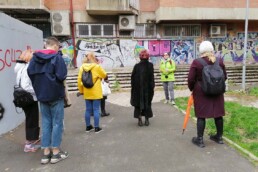
The fourth Vračar street art weekend, from October 22nd to 24th, is organized by Božidarac and the organization Street Art Belgrade, with the aim of bringing street art closer to the general public through lectures and walks on the streets of Vračar.
As part of the street art weekend, the first 3D models of murals for blind and partially sighted people in Serbia will be installed at two locations in Vračar. Mural models are an innovative approach to the presentation of street art and graffiti because by creating works of street art in 3D technology, it is possible for blind and partially sighted people to get to know the works of art on the streets of Belgrade through touch.
Art historian Ljiljana Radošević will lead three street art tours, one virtual and two on the streets of Vračar.
The first tour takes you through the virtual exhibition of street art "Loving Street art Belgrade" via the Zoom application. With the expert guidance of the curator of the exhibition Ljiljana Radošević, the audience could walk through the virtual space where there are over 40 works by local and foreign artists.
https://youtu.be/VJeT2ROHDu4?si=Vr8cQVaitIpoVDoX
On Saturday 23.10. and Sunday 24.10. organized tours through the streets and courtyards of Vračar. The audience will have the opportunity to visit 3D murals for the blind and partially sighted, but also to learn the difference between graffiti and street art, their local and global history, different techniques and artists that can be seen in Vračar.
All activities were free.

The first 3D models of murals for blind and visually impaired people
The goal of the "Art in Passing" project, implemented by Street Art Belgrade and the Telenor Foundation, is to bring street art closer to blind and partially sighted people through the installation of models made with 3D technology.
The first models were installed at two locations in Vračar, on the occasion of October 15, which is celebrated throughout the world as the Day of the Blind and Visually Impaired.
Mural models are an innovative approach to presenting street art and graffiti, because by creating works of street art in 3D technology, blind and partially sighted people are able to get to know the works of art on the streets of Belgrade through touch.
"Street art is considered the freest form of art, because regardless of its transitory character, it is on the streets that belong to everyone. However, not everyone can see and experience it. In this way, we want to bring this direction of contemporary art closer to blind and partially sighted people and let's make that dynamic and creative world available to them" said Ljiljana Radošević, art historian.
"The City Organization of the Blind in Belgrade gathers around 2,000 blind and partially sighted people from the territory of all Belgrade municipalities. Therefore, every activity that contributes to the blind population having more things to experience is very important. This is not just an artistic display, but this approach respects our population. Within the works of art, there are also descriptions in Braille, which will bring our script closer to citizens who do not have vision problems" said Nikola Đorđević, president of the Belgrade City Organization for the Blind.
"The project 'Art in Passing' brings street art closer to blind and partially sighted people in an innovative and creative way. Art is an expression of freedom, it brings people together, erases borders and obstacles. It has a great role in creating a more inclusive and tolerant environment, to which the Telenor Foundation has been committed since from the very beginning. In this way, we break down another barrier and take a step towards a better society" said Milica Begenišić, manager of the Telenor Foundation.
For the first models, the works of the Belgrade artist Weedzor, who has been present on the streets of Belgrade since 2005 and is known, among other things, for his large-scale works, were selected. The models were made for murals that are recognizable by the elements of cylindrical shapes that form the structure of animal heads - Giraffe and Wolf. Along with the 3D models, there is also a description of the works in Braille, as well as QR codes that lead to a website with more information about the project. Guided tours will be continuously organized for all interested citizens, and the plan is to install 3D murals in several locations in Belgrade.
In Serbia, there are about 12,000 blind and partially sighted people who need support in realizing their rights, as well as integration into all social flows and daily activities, and cultural life and art are an integral and important part of that.
The author of the project is the Street Art Belgrade organization, whose members have been researching, documenting and popularizing street art and graffiti for over two decades.
The project "Art in Passing" is implemented as part of the Telenor Foundation competition "Imagine Everything", with the support of the Ministry of Culture and Information and the Austrian Cultural Forum. Partners in the project are Božidarac and the city organization of the blind in Belgrade. Voxellab, a 3D technology company, has produced 3D models of murals for the blind and partially sighted.

QR codes for the virtual exhibition
Nalepnica sa QR kodom pored rada koji su uradili JANA i HOPE u Cetinjskoj vodi ka prvoj izložbi ulične umetnosti i grafita Beograda u virtuelnom prostoru na platformi VR-All-Art.
U okviru izložbe je predstavljeno preko 40 radova koje su domaći i strani autori stvarali na ulicama Beograda, podeljenih u kategorije - stara škola grafita, saradnje više umetnika, karakteri, šabloni, nalepnice, murali... Izložena dela prate tekstovi koji opisuju kontekst u kojem su izabrani radovi nastajali i pružaju uvid u istoriju razvoja grafiti i street art kulture u Beogradu.
Projekat je realizovan uz podršku Ministarstva kulture i informisanja Republike Srbije.
Love and Hope
A mix of different visual expressions can be seen in the piece by Jana and Hope from 2018, in Cetinjska street. The event this piece was made for revolved around a workshop with children, to whom Cafe 16 is dedicated and in whose yard the event took place. The cafe is called 16 because that is the legal age when children can start working, and in this café, they can get practice in order to help them get a proper job. Jana made her already recognizable heart, which she uses as a template to symbolically represent different motives and emotions. This time, she made it as it is the most important muscle in our body and the general symbol of love. Paired with Hope’s piece, we get a very strong, albeit unintended, message of Love and Hope that filled every pore of this event. Each artist did what they normally do, but they recognized that by working together they could add additional meaning and enhance the overall impression.

Promotion within the "Calle Libre" festival in Vienna
As part of the street art festival in the museum, we presented an exhibition in a virtual space and presented the entire concept of digitization to an international audience.
The project was implemented with the support of the Ministry of Culture and Information for projects in the field of mobility.
This is an innovative approach to the presentation of street art and graffiti that indicates the need to introduce digitization in the field of contemporary creativity. Although nothing can replace the observation and research of graffiti and street art in real space, in the last decade, and especially in 2020, it has become obvious that new technologies give an additional dimension to this field of art.
Calle Libre is one of the largest festivals of urban aesthetics in Europe, where street art is created on decorated walls throughout the city of Vienna.
Through artistic interventions, the festival encourages dialogue between the public and artists. The festival organizes workshops, exhibitions, panel discussions, urban art tours and evening events to create a dialogue and exchange of ideas centered on street art and urban aesthetics. Over the past years, over 16,000 visitors from all walks of life and social strata have passed through the festival. The goal of the festival is to show the other side of street art, in addition to graffiti, which the general public often identifies as vandalism.
You can find more information about the "Calle Libre" festival on the Internet presentation and Instagram profile:
Internet: callelibre.at
Instagram: @callelibre
Third Street Art Weekend in Vračar
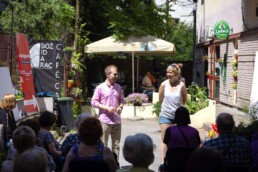
We opened the weekend with the third consecutive street art workshop for seniors.
The participants were fellow citizens over 60 years old, and the workshop was led by Jana Danilović, a muralist, street artist and painter with extensive experience.
During the week, we discovered the streets and walls of Vračar on guided tours. Due to the great interest from last year, two groups were organized this year led by art historians Srđan Tunić and curator Ljiljana Radošević.
In addition to walking in real space, visitors had the opportunity to visit the virtual exhibition "Loving street art Belgrade". With VR glasses, experiencing the space and walking through the virtual gallery was a unique experience.

The first outdoor street art lecture
Why do we organize outdoor street art lectures?
To understand street art, you need to immerse yourself in the city, understand the history, motives and artists. Although street art has been around for over 50 years, the wider community is not familiar with the development and value of this visual expression. This problem affects not only artists, researchers and curators, but also society in general, although the actors are not yet aware of it. We want the result to be an additional understanding of the lecture participants that graffiti and street art are ephemeral art forms performed without permission and that this is what makes them the most honest and free artistic expression.

Street art lectures in the open air
Join the team from the "Street Art Belgrade" organization in discovering street art in Belgrade.
In addition to spending quality time outside, you will have the opportunity to get acquainted with those peculiarities of Belgrade that you might not notice at first glance. "Get to know your city in order to love it more" is the principle based on which the outdoor street art lectures were created, and the locations of Savamala, Dorćol, the city center, Vračar and block 45 will be revealed.
Graffiti and street art, as very recognizable artistic expressions, happen in unity with the city. That is why the lectures will not only be about the aforementioned artistic expressions, but also about the coexistence of the city and art.
At each lecture, pearls of street art are revealed, but through the prism of the capital's history. Outdoor lectures are led by professional artists and absolute lovers of the capital, who have been researching and popularizing street art and graffiti for over two decades.

Promotion of digitization of contemporary creativity
The topic of the lecture was the experience of our association in the work of creating a digitized archive of street art in the previous two years, as well as setting up the first exhibition of Belgrade's street art and graffiti in a virtual space in our region.
This exhibition is a unique example of digitization, and it is available to audiences from all over the world on the VR-All-Art platform. More than 40 works created by local and foreign authors on the streets of Belgrade were presented. The works are divided into several categories - old school graffiti, collaborations of several artists, characters, templates, stickers, murals... The exhibited works are accompanied by texts that describe the context in which the selected works were created and provide an insight into the history of the development of graffiti and street art culture in Belgrade. The texts are in English, and audio monitoring of the exhibition is also possible. In addition to the exhibition, a life-size virtual replica of a Belgrade wall (3D wall) was installed in the space.
Students had the opportunity to visit the exhibition and get an impression of the works of art in a virtual space.
During the lecture, art historian Ljiljana Radošević presented the project of digitization of contemporary creativity through the presentation of a digitized archive of photos and texts on the topic of street art.
An example of successful digitization of contemporary creativity is the first exhibition of Belgrade's street art in a virtual space called "Loving Street Art Belgrade".
You can view the exhibition at the following link:
https://vrallart.com/vr-exhibitions/eg/take_3_street_art_belgrade/
It is a long-term project to promote digitization and preservation of street art in Belgrade and Serbia. The goal of the project is to raise awareness of the preservation and processing of existing street art material through digitization and innovative presentation in virtual space.
The project is supported by the Ministry of Culture and Information in the field of digitization of cultural heritage and contemporary creativity for 2021.

The first VR exhibition - Loving Street Art Belgrade
In the unique virtual space of the VR-All-Art platform, an exhibition called "Take III - Loving Street art Belgrade" was set up.
Visitors from all over the world will have the opportunity to access the exhibition through the website from any computer or laptop, as well as with the use of VR equipment. The goal of the exhibition is to provide a unique artistic experience and introduction to the world of graffiti and street art in Belgrade.
When they "step" into the "Take III - Loving Street Art Belgrade" exhibition space, visitors can view over 40 works divided into categories - old school graffiti, multi-artist collaborations, characters, templates, stickers, murals... The exhibited works are accompanied by texts which describe the context in which the selected works were created and provide an insight into the history of the development of graffiti and street art culture in Belgrade. The texts are in English, and audio monitoring of the exhibition is also possible.
In addition to the exhibition, a life-size virtual replica of a Belgrade wall has also been installed in the space. Visitors can approach the wall and inspect the works in detail.
You can view the exhibition here:
https://vrallart.com/vr-exhibitions/eg/take_3_street_art_belgrade/
This is an innovative approach to the presentation of street art and graffiti that will allow you to get to know the works created by local and foreign artists on the streets of Belgrade.
"Although nothing can replace the observation and research of graffiti and street art in real space, in the last decade, and especially in 2020, it has become obvious that new technologies give an additional dimension to this field of art" - said curator Ljiljana Radošević, art historian and author of the exhibition.
The author of the project is the "Street Art Belgrade" organization, whose members have been researching, documenting and popularizing street art and graffiti for over two decades. For the "Loving Street Art Belgrade" exhibition, the works that were the most popular on the "Street art Belgrade" Instagram page in the previous period were selected.
The exhibition is located on the revolutionary platform VR-All-Art, which serves to display and explore works of art in virtual and augmented worlds.
The goal of the project "Street Art Belgrade" and the exhibition is to make photos and information about graffiti and street art available to the general public.
The project was realized with the support of the Ministry of Culture and Information of the Republic of Serbia.
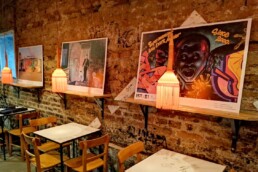
Exhibition Street Art Tel Aviv
Through this exhibition, the two cities, which share the name "white city", were additionally connected.
White cities are connected by very dynamic and vital street art. Those who walk the streets of Belgrade and Tel Aviv will notice walls with old graffiti, new murals, as well as construction sites that are getting closer and closer. Savamala and Florentin are like reflections in a mirror.
The southern part of Tel Aviv called Florentin is located between the ancient port of Jaffa and the first Jewish settlement of Tel Aviv, Neve Tedek. Florentine is known as a bohemian quarter and is often compared to Berlin's Kreuzberg and New York's Lower East Side, as it is home to people from all over the world, with a wide variety of occupations, sexual orientations and religions. It is a labyrinth of streets in which new buildings can be seen behind half-ruined buildings and open-air stalls; old craft shops are located next to art galleries, and almost every meter of this area is covered with graffiti, murals and messages.
White city
The city of Tel Aviv has existed for 110 years, and the twenties and thirties of the 20th century were marked by a large wave of immigrants from Germany and Austria. There was a need to build apartments for thousands of new residents and so the whole city was built in the Bauhaus style, which was popular at the time. More than 4,000 white buildings were built in Tel Aviv alone, which is why Tel Aviv is called the "White City", because it has the largest group of Bauhaus-style buildings in the world.

Participation in the PDP conference in Novi Sad
During the PDP conference, the association "Kruna" participated in two segments of the program, in the interesting Pecha Kucha Night format where the digitization project was presented and in the panel discussion - Mural Liza - together with Ben Johnston, Uroš Štrboja, Milica Grujić.
PDP (Print, Design, Photography) is a creative media conference that has been gathering designers, photographers and other visual creators for 11 years with the aim of educating the public in the fields of creative media through lectures, workshops and exhibitions, as well as promoting the work of students and young people through competitions. author.
The multidisciplinary program of the PDP conference each year includes lectures, workshops, audio-visual performances, and the presentation of authors and works from the PDP competition for designers, illustrators and other visual creators.
Visual artist Ben Johnston painted a mural on the facade of a building in Antona Chehova Street, across from Eđšeg Cultural Station. Ben has painted numerous murals around the world, and his style is characterized by interesting, often three-dimensional, typographic solutions of always affirmative words or phrases. What is interesting is the fact that he is a self-taught interdisciplinary artist who, in addition to painting murals, is also involved in design, 3D printing and branding.

Tribune "The Eye of the Street"
At the beginning of the year, the forum Street art photographer was held - observer or actor on stage?
Street art and graffiti have become so commonplace that today it is hard to imagine an urban space without them. The limited durability of the works turns city facades into a dynamic stage for different artistic expressions, styles and manuscripts. In a continuous process of transformation, the works disappear and emerge, making each moment of observation unique.
In a similar way that museums do in the case of traditional art, the role of preserving, that is, recording, archiving and presenting these works of limited durability, was taken over by photographers on their own initiative. Acting outside the box and without the strict parameters that institutions rely on, street art photographers approach documenting works on the street in completely different ways, building valuable collections and archives, often accessible to the public.
How do photographers see their role, and what does their role look like from the position of artists? Is their action a partnership, mutually conditioned, or are we witnessing the emergence of a kind of informal institutions that assume the role of evaluation and setting standards? Are these chroniclers of the street art and graffiti scene distant observers or an integral part of it?
Forum participants
Jana Danilović, visual artist and author of a doctoral thesis on the topic "City and painting - the importance and function of artistic interventions in public space", moderator; Ljiljana Radosević, art historian, author and curator of the Street Art Walks tour; Marko Krstić, graffiti artist; Aleksandar Djordjević, photographer, author of the book "Street Art Belgrade".
Organizers
Association Street Art Belgrade, street art festival Rekonstrukcija, street art collective Street Smart, center for education and culture Božidarac.
Photo © Dimitrije Stamenković
Book promotion, Mama Shelter, Paris
Promotion of street art within the activities of the Tourist Organization of Serbia in France.
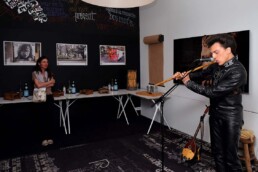
B2B meetings were held on the rooftop of the Mama Shelter Hotel (the best rooftop in Paris for 2017, according to Vogue magazine), and after that an exhibition of photographs of Belgrade's street art, selected from the book "Street art Belgrade" was arranged for the invited journalists " by Aleksandar Đorđević (translated into French), a performance by the Belgrade street art artist TKV and a shorter performance by the famous Serbian musician, composer, singer and multi-instrumentalist Slobodan Trkulja.

Exhibition, Balkan Trafik, Brussels
As part of the "Balkan Trafik" festival, the street art of Belgrade was presented for the first time through an exhibition of works from the book "Street Art Belgrade".
As part of the 12th edition of the "Balkan Trafik Festival", which is organized in Brussels from April 19 to 22, an exhibition dedicated to the street art of Belgrade, by Aleksandar Đorđević, was presented. The exhibition "Street Art Belgrade" presented more than 50 photographs of the street art of Belgrade, selected from the book "Street Art Belgrade".
Balkan Traffic! the festival has been held for 12 years in Brussels, and represents a kind of cultural journey through the Balkan region. The festival gathers participants from the world of media and culture, with the aim of positive promotion of these countries. This year, over 250 artists from the Balkan countries will represent their countries at the Balkan Trafik Festival through music, from traditional to rock, jazz, dub and hip hop, theater, films, dance, traditional customs, culinary workshops and art exhibitions.
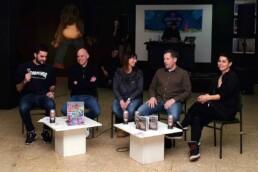
Promotion of the Street Art Belgrade project as part of the Graffiti na Gradele festival, SC Zagreb
As part of the Graffiti na Gradele event in Zagreb, there was a presentation and discussion with the authors of graffiti and street art photo monographs and the books "Street Art Zagreb" and "Street Art Belgrade".
In addition to the fact that the top works of local artists are exhibited in one place, the presentation of photo monographs of graffiti and street art scenes of Zagreb and Belgrade, which were recently published and which document what surrounds us everyday on the city streets, was also organized. Photos of numerous works of our friends and collaborators can be found in both photo monographs, so this was an opportunity to show how the Croatian and Serbian graffiti scenes breathe, develop together and actively cooperate.
During the presentation of the books, a conversation was held with the authors and an artist from Belgrade - TKV and an artist from Zagreb - Lunar.
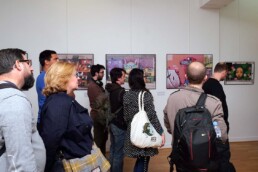
Exhibition of Belgrade street art in Paris - "Face au mur"
In September 2017, an exhibition of street art from Belgrade was presented in the Serbian cultural center in Paris. The works were selected from the book on street art - "Street Art Belgrade", which was translated into French on this occasion.
As part of the manifestation "Week of Foreign Arts", which is organized every year at the end of September in Paris, an exhibition dedicated to the street art of Belgrade was opened in the Serbian cultural center and the book "Street Art Belgrade" by Aleksandar Đorđević, published by Komsha, was presented. On the occasion of the opening of the exhibition, well-known Serbian artists ARTEZ and TKV painted panels live in front of the cultural center, which attracted a lot of attention from passers-by at this central location in Paris, where the cultural center is located. The exhibition "Face au mur" lasted from September 23 to October 21, and visitors had the opportunity to see over 50 photographs of street art. The book has been translated into French, and the French edition is available in Serbia as well as in several well-known bookstores in Paris.
The exhibition "Face au mur" and the book "Street Art Belgrade" deal with the street art of Belgrade. This art is exposed to views, time and emotions. The desire of the author Aleksandar Đorđević and the Komsha publishing house is to preserve, document and popularize, above all, street art as a specific form of art because it is an unavoidable part of the urban environment. The book "Street Art Belgrade" and the exhibition "Face au mur" present an overview of Belgrade's street art, both stylistically and backwards through time.
The first graffiti in Europe appeared precisely in Paris, and Paris had a great influence on the Belgrade graffiti scene. One of the examples is the street artist Jens, who after his stay in Paris, brought a new style from the streets of Paris to Belgrade, thus reviving and starting street art in the 90s, which completely died out due to the political and economic difficulties the country was going through. . Famous Parisian artists visited Belgrade and left their works of art on the walls (Black le Rat, REMED), and many Serbian artists spent time in Paris, where they gained new knowledge and inspiration for their street art.
The exhibition was realized within the competition of the Ministry of Culture and Information of the Republic of Serbia and with the support and cooperation of the Cultural Center of Serbia in Paris, the French Institute in Serbia and the Forum of Foreign Cultural Centers in Paris.
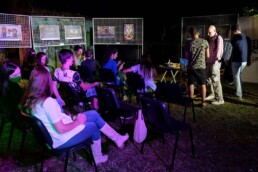
Street art festival in Kraljevo
Street art festival Kraljevo
In Kraljevo, the promotion of the book "Street Art Belgrade" by Aleksandar Đorđević was held in the courtyard of the French House. At the same time, visitors could see an exhibition of prints from the book with Belgrade graffiti.